

Hand, Foot, and Mouth Disease (HFMD) (Coxsackievirus)
What is Hand, Foot, and Mouth Disease (HFMD) (Coxsackievirus)?
Coxsackievirus A16 is typically the most common cause of HFMD in the United States. Other coxsackieviruses can also cause the illness. The illness generally occurs during the spring, summer, and fall months. Anyone can get HFMD, however infants and children younger than 5 years of age are most often affected.
What causes hand, foot, and mouth disease?
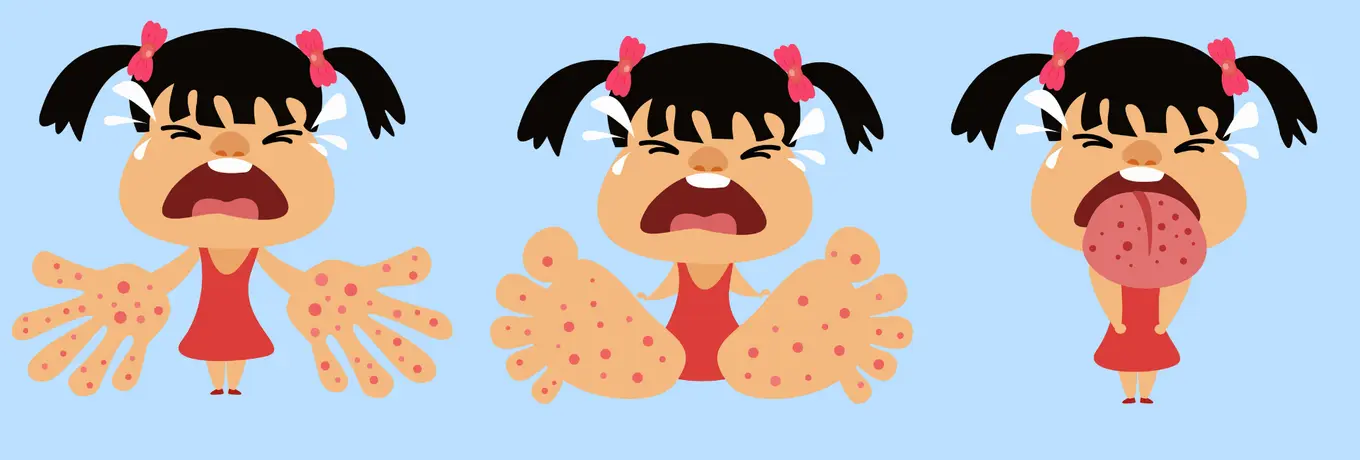
Hand, Foot, and Mouth Disease is caused by one of several types of viruses. It is usually characterized by tiny blisters on the inside of the mouth and the palms of the hands, fingers, and soles of the feet. It is commonly caused by coxsackievirus A16 (an enterovirus), and less often by other types of viruses.
Who can get hand, foot, and mouth disease?
Young children are primarily affected, but it may also affect adults. Most cases occur in the summer and early fall. Outbreaks may occur among groups of children, especially in child care centers or nursery schools. Symptoms usually appear 3 to 5 days after exposure.
How is it spread?
HFMD is usually spread through person-to-person contact. People can spread the disease when they are shedding the virus in their feces. It is also spread by the respiratory tract from the mouth or respiratory secretions (such as from saliva on hands or toys). The virus has also been found in the fluid from the skin blisters. The infection is spread most easily during the acute phase/stage of illness when people are feeling ill, but the virus can be spread for several weeks after the onset of infection.
An incubation period of 3-7 days after exposure is recommended. The virus can be shed for 1-3 weeks from the respiratory tract and for weeks to months in the stool. Asymptomatic people can still spread the virus.
What are the symptoms?
- Fever
- Sore throat
- Cough
- Diarrhea
- Runny nose
- Painful mouth sores that may interfere with eating and drinking
- Tiny blisters (vesicles) lasting 7-10 days on any or all these sites: palms, soles, mouth, buttocks
- The child may be cranky, fussy or generally feel unwell.
How is it treated?
There is no specific treatment for the virus that causes HFMD.
How do I help prevent and control the spread?
- Washing hands well for at least 20 seconds, especially after going to the bathroom, changing diapers, and/or handling diapers or other stool-soiled material.
- Covering the mouth and nose with a disposable tissue when coughing or sneezing, followed by proper hand washing.
- Increasing the frequency of cleaning and disinfecting frequently touched surfaces and items, including toys, phones, doorknobs, rails, desks, chairs, faucets, toilet handles, etc.
- Excluding children from child care or school settings if the child has a fever, uncontrollable “hand to mouth” behavior, is not able to contain their secretions, such as ulcers in the mouth, and is drooling, or draining sores that cannot be covered.
Resources
Fact Sheets
Flyers & Posters
Videos
This video playlist features quick, easy-to-follow videos on how to properly wash your hands. Learn the basics to stay healthy and prevent the spread of germs.