Routine Traffic Stop Handbook
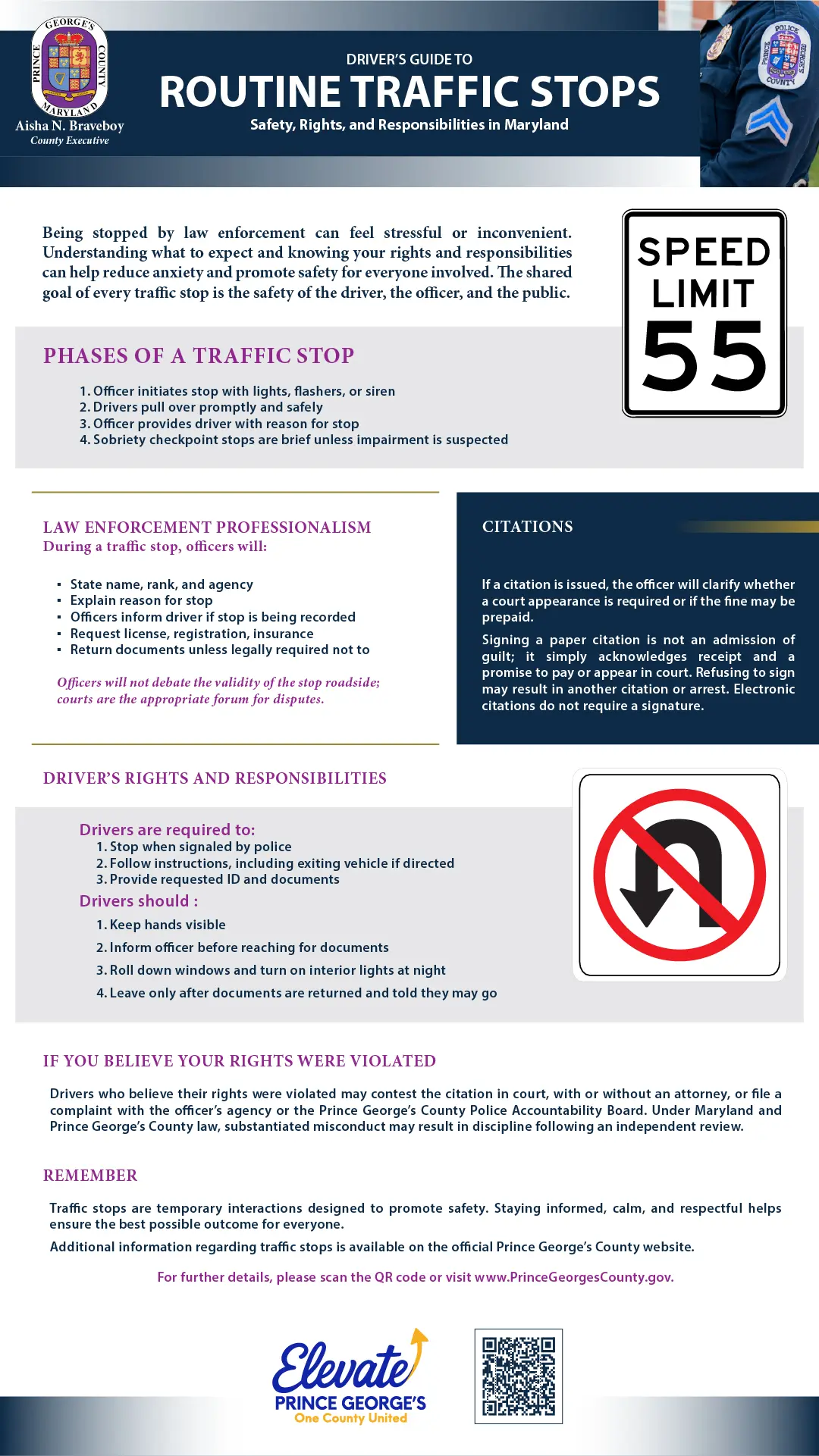
Driver’s guide to routine traffic stops
Safety, rights, and responsibilities in Maryland
Being stopped by law enforcement can feel stressful or inconvenient. Understanding what to expect and knowing your rights and responsibilities can help reduce anxiety and promote safety for everyone involved. The shared goal of every traffic stop is the safety of the driver, the officer, and the public.
Phases of a traffic stop
- Officer initiates stop with lights, flashers, or siren
- Driver pulls over promptly and safely
- Officer provides driver with reason for stop
- Sobriety checkpoint stops are brief unless impairment is suspected
Law enforcement professionalism
During a traffic stop, officers will:
- State name, rank, and agency
- Explain reason for stop
- Inform driver if stop is being recorded
- Request license, registration, insurance
- Return documents unless legally required not to
Officers will not debate the validity of the stop roadside; courts are the appropriate forum for disputes.
Driver’s rights and responsibilities
Drivers are required to:
- Stop when signaled by police
- Follow instructions, including exiting vehicle if directed
- Provide requested ID and documents
Drivers should:
- Keep hands visible
- Inform officer before reaching for documents
- Roll down windows and turn on interior lights at night
- Leave only after officer has finished and told them they may go
Citations
If a citation is issued, the officer will clarify whether a court appearance is required or if the fine may be prepaid.
Signing a paper citation is not an admission of guilt; it simply acknowledges receipt and promise to pay or appear in court. Refusing to sign may result in another citation or arrest. Electronic citations do not require a signature.
If you believe your rights were violated
Drivers who believe their rights were violated may contest the citation in court, with or without an attorney, or file a complaint with the officer’s agency or the Prince George’s County Police Accountability Board. Under Maryland and Prince George’s County law, substantiated misconduct may result in discipline following an independent review.
Remember
Traffic stops are temporary interactions designed to promote safety. Staying informed, calm, and respectful helps ensure the best possible outcome for everyone.